Ask most people what makes one pasta better than another, and you'll usually get one answer: the sauce. But spend time with the people who actually make pasta for a living, and a different picture emerges — the pasta itself is doing far more work than most of us give it credit for, and there isn't just one way to make it well.
Some producers chase quality through a specific technique, like bronze-die extrusion. Others chase it through wheat — growing their own, or insisting on a single heirloom variety. Some prove it through an official certification with legal teeth behind it, while others simply refuse to rush a process that takes generations to perfect. At Pusateri's, we carry a range of Italian pasta brands precisely because each one represents a genuinely different answer to the same question: what does it actually take to make great pasta? Here are six worth knowing.
Handmade, Regional, and Rooted in Calabria: Astorino Pasta
Astorino Pastificio Artigianale is the youngest producer on this list by a wide margin — founded in 2002 in Calabria, in the south of Italy, rather than tracing back a century or more like some of its neighbours on this list. What it lacks in age, it makes up for in specificity: this is a family-run pastificio built around regional identity, using durum wheat grown and milled in Calabria, and water drawn from the Sila Mountains.
Astorino's approach to quality isn't about a single dramatic technique — it's about staying rooted in where it comes from. The wheat isn't sourced from wherever is cheapest that season; it's regional, tied to the land the company actually operates on. For a home cook, the practical result is a pasta with genuine character behind it — the kind of everyday staple that's worth reaching for even on a Tuesday, precisely because "everyday" doesn't have to mean generic.
The Bronze-Cut Pasta Tradition: What It Actually Means
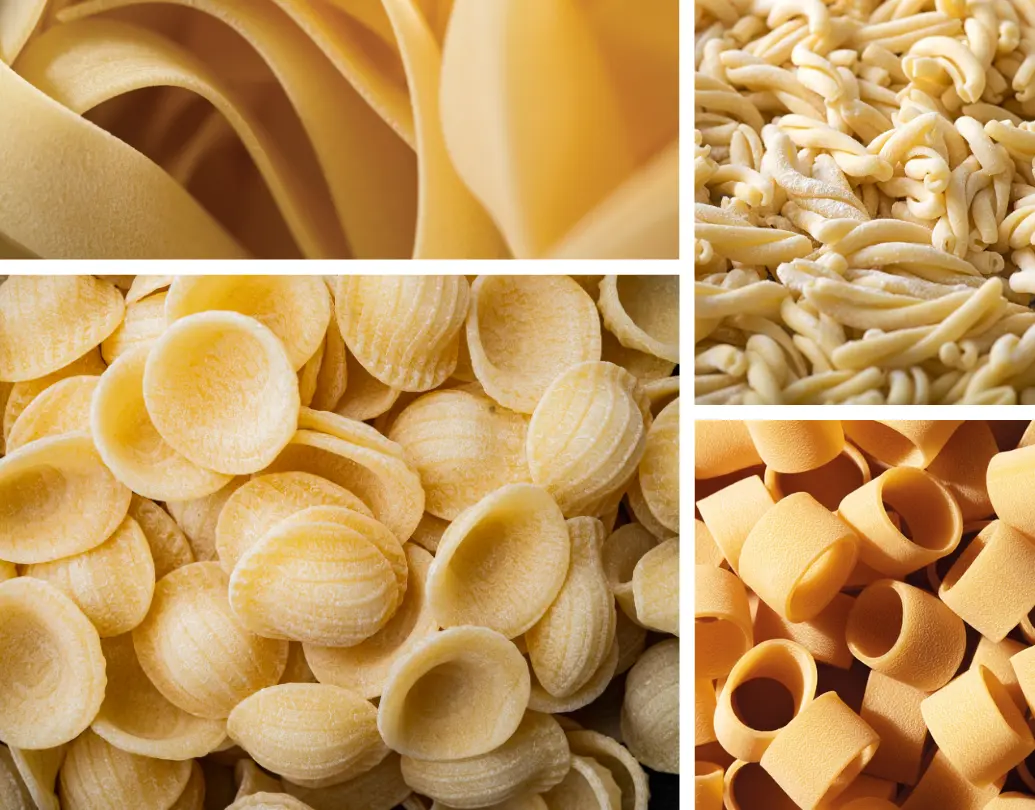
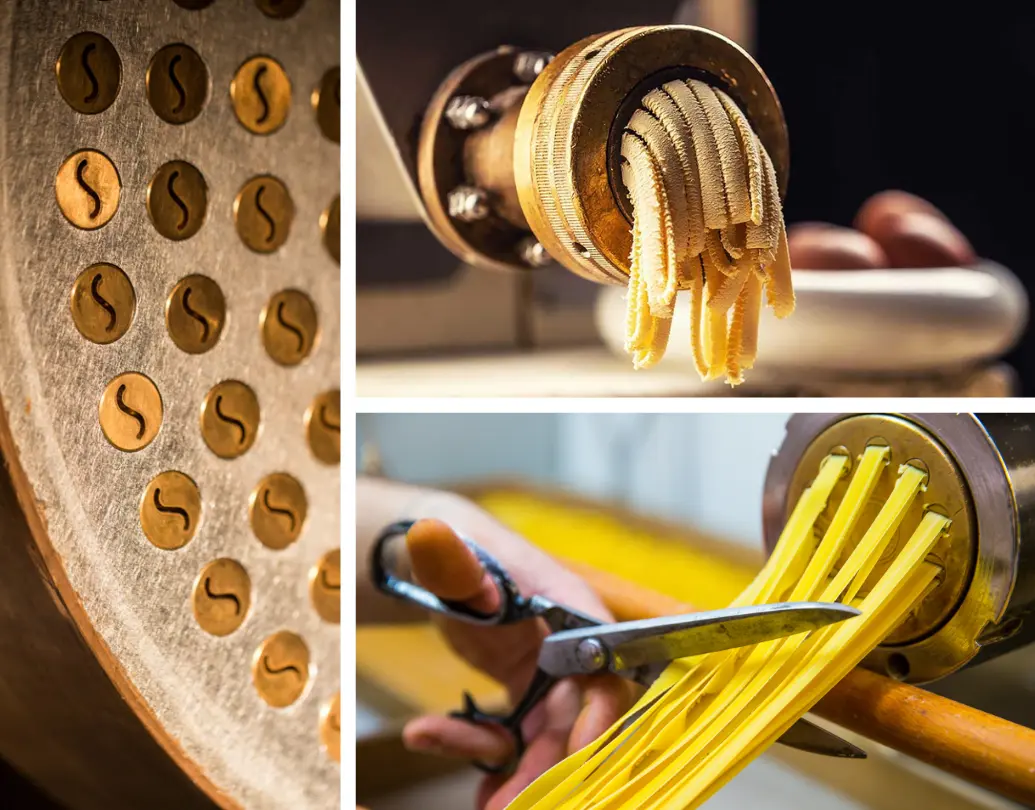
Before going further, it's worth explaining a term you'll see on a lot of premium Italian pasta packaging: bronze-cut, or trafilata al bronzo. Most mass-market pasta is extruded through Teflon-coated dies, which produce a smooth, slick surface — efficient to manufacture, but not especially good at holding onto sauce. Bronze dies, by contrast, leave behind a rough, porous surface texture that sauce can actually grip, rather than sliding off.
The other half of the equation is drying. Industrial pasta is often dried quickly using high heat — a matter of hours. Artisan producers who use bronze dies typically pair them with slow drying at low temperatures, sometimes stretching the process out over one or even two full days. The result is a more complex flavour and a firmer, more consistent bite once cooked.
Few take this further than Rustichella d'Abruzzo, a family-run pastificio founded in 1924 in Penne, Abruzzo, by Gaetano Sergiacomo, and revived by his daughter Nicolina Peduzzi in 1981. Some Rustichella d'Abruzzo shapes are dried for up to 56 hours — more than double the industry's already-slow "slow" standard. Several of their lines also use Senatore Cappelli, a century-old heirloom durum wheat variety once considered cutting-edge in the 1920s and prized today for its deep, "wheaty" flavour. If you're planning a dinner where the pasta itself deserves to be the centrepiece, this is the one to reach for.
The Science of a Perfect Bite: Rummo Pasta
Founded in 1846 in Benevento, in Italy's Campania region, Pasta Rummo built its reputation on a method it calls Lenta Lavorazione — slow processing — combining bronze-die extrusion with extended low-temperature drying that can run up to 48 hours depending on the shape.
What sets Pasta Rummo apart isn't just the slowness of the process, but how seriously it verifies the result. Every production lot reportedly goes through a tasting phase in which two in-house chefs cook and taste the pasta, then measure its firmness using an instrument called a dynamometer — a device that essentially replicates the mechanical act of biting down, giving the company a consistent, testable standard for what "al dente" should actually feel like, batch after batch. It's a strikingly rigorous, almost scientific approach to a product most of us think of as purely traditional.
That same slow processing has a genuinely practical payoff for home cooks: Rummo has a reputation for being a little more forgiving than some other bronze-cut pastas if it's left in the pot a minute or two longer than intended. For a household where dinner rarely comes together at the exact right second, that's a real, everyday advantage.
The Original Home of Pasta: Garofalo
Gragnano, a small town near Naples, has been so central to Italian pasta-making since the 16th century that it's often called simply "the birthplace of pasta" — its main street was historically designed so sea breezes could sweep through and dry pasta hung out on lines. Pasta Garofalo has been producing pasta there since 1789, making it not just the oldest brand in this lineup, but among the oldest pasta companies in the world.
Garofalo's pasta carries the Pasta di Gragnano IGP certification — a legal, EU-protected designation, similar in spirit to Champagne or Parmigiano Reggiano, that guarantees the pasta was made within Gragnano itself, using only durum wheat semolina and water, extruded through bronze dies, and slow-dried at low temperatures for up to 24 hours. Unlike most of the quality markers in this guide, which come from a brand's own internal philosophy, this one is independently regulated: the label is a legal guarantee of its authenticity.
For a home cook, that makes Garofalo a genuinely reassuring choice — you're not just trusting a brand's word on quality, you're trusting a certification system with real teeth behind it, backed by more than two centuries of continuous production in the one town most associated with pasta itself.

Pasta That Never Leaves the Farm: Mancini
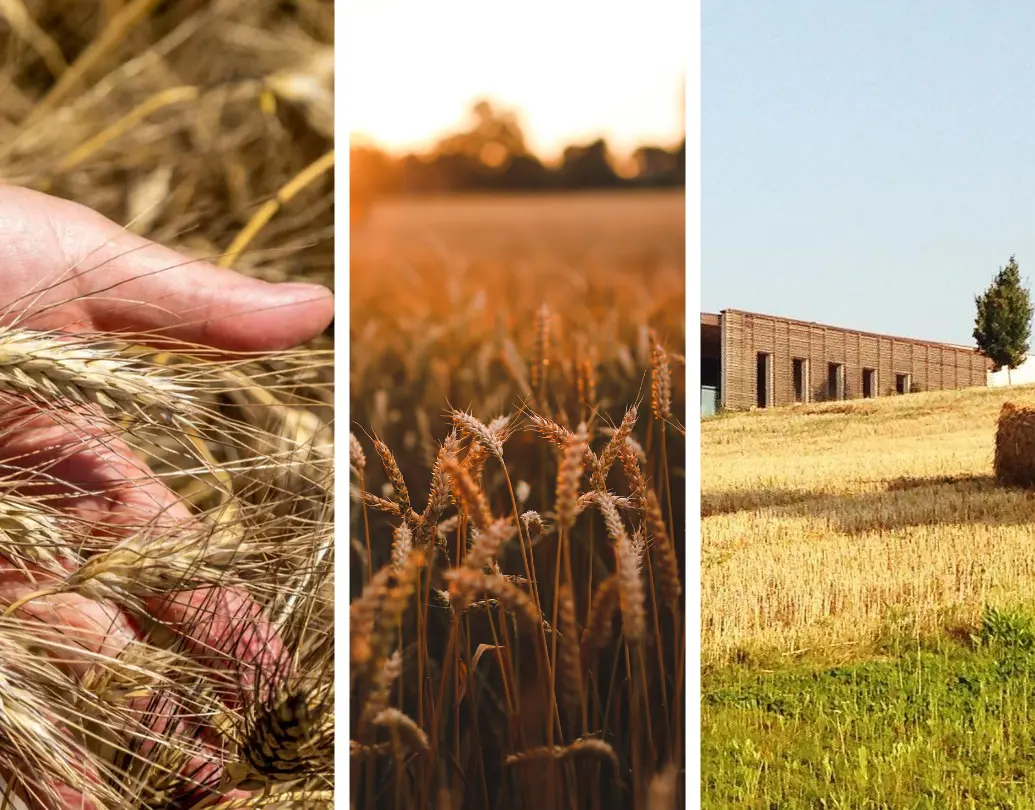
Most pasta brands buy their wheat on the open market, sourcing semolina from wherever meets their quality standards that season. Pasta Mancini, based in Italy's Le Marche region, does something rarer: the family has farmed its own durum wheat since 1938, and in 2010, the fourth generation — led by agronomist Massimo Mancini — built their pasta mill directly in the middle of their own wheat fields.
The result is pasta that's genuinely single-estate and harvest-dated, closer in spirit to an estate wine than a typical pantry staple. Because each batch reflects that specific year's harvest, the pasta can vary subtly from one year to the next — a level of traceability and terroir-driven character that's almost unheard of in pasta production. For anyone who already cares about knowing exactly where their food comes from — the same instinct that draws people to a good butcher counter or a single-origin olive oil — Mancini is the pasta equivalent of that idea, and for this reason you will find Pasta Mancini served in top restaurants around the world, its quality and production standards are unrivalled.
A Different Kind of Craft: Cipriani Venetian Egg Pasta
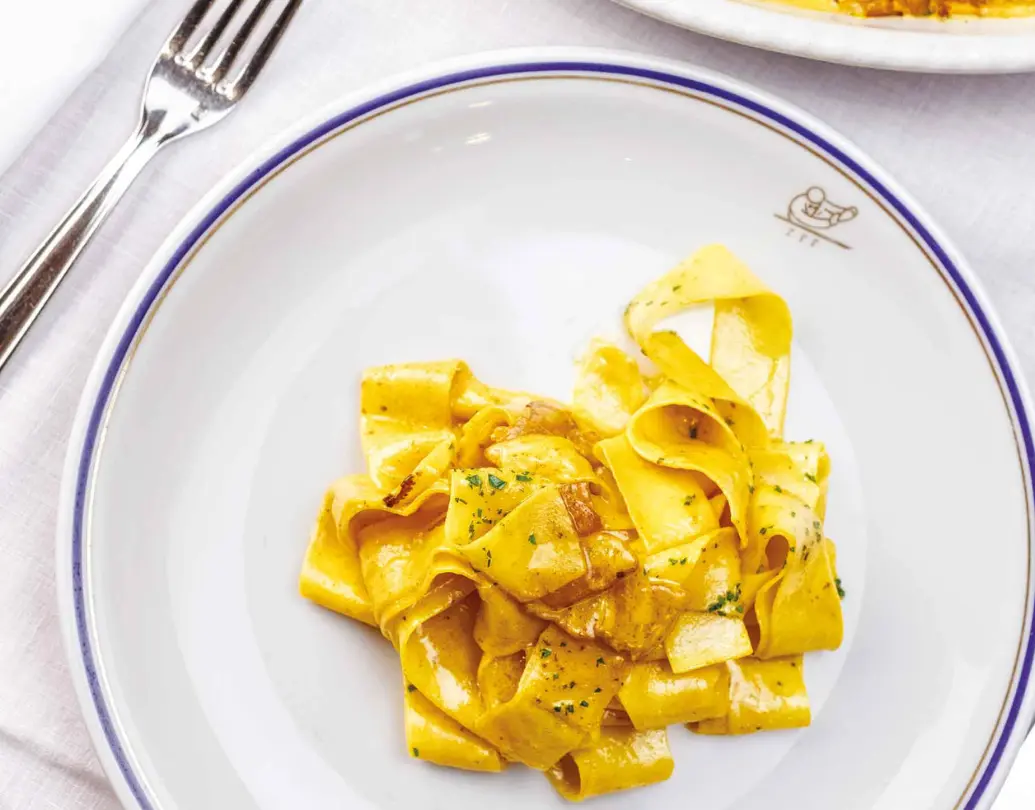
Cipriani Pasta belongs in a different category altogether — not dried durum wheat pasta, but egg pasta, tracing back to Harry's Bar in Venice, founded by Giuseppe Cipriani in 1931.
Unlike semolina pasta, made from durum wheat, Cipriani egg pasta is made from "00" fine wheat flour and fresh eggs - its taste and texture are entirely different. Where bronze-cut durum wheat pasta has bite: a firm, slightly resistant chew, and a rough surface built specifically to grab onto a heartier sauce; egg makes the dough silkier and more elastic, and tender rather than firm — it practically melts with its rich and buttery texture.
Cipriani's dough is pressed through bronze cylinders roughly 100 times to achieve an especially delicate, silky texture, then air-dried at low temperature for about 16 hours — a much shorter, gentler process suited to egg pasta's finer structure.
The result is a pasta that cooks in just a couple of minutes and is best paired with simple, quality-forward sauces that don't compete with its delicate texture — a brown butter, a light cream, or simply olive oil and shaved cheese.
Put simply: reach for a bronze-cut durum wheat pasta when the meal is meant to feel hearty and rustic, and reach for Cipriani when the occasion calls for something that feels closer to an indulgence — refined, a little delicate, and unmistakably tied to its Venetian roots.
A Simple Guide to Choosing Between Italian Pasta Brands
| Pasta Brand | Its Path to Quality | Best for |
| Astorino | Handmade, regional Calabrian wheat | Everyday weeknight cooking |
| Rustichella d'Abruzzo | Extreme slow-drying, heirloom wheat | Special-occasion dinners |
| Rummo | Tested precision, forgiving cook time | A flavourful, reliable all-rounder |
| Garofalo | IGP-certified heritage from pasta's birthplace | A trusted, certified everyday premium |
| Mancini | Single-estate, harvest-dated wheat | Provenance-driven cooking |
| Cipriani | Venetian egg pasta heritage | Delicate sauces, special occasions |
Great pasta doesn't come from one formula — it comes from six different kinds of care, each visible in the bowl once you know what to look for. Come explore Toronto's full selection of Italian Pastas in Pusateri's pasta aisle, and don't hesitate to ask our team which one's right for what you're making tonight.
The Art of Italian Pasta: Six Producers, Six Different Paths to Quality