Walk down the honey aisle at most grocery stores and it's easy to assume honey is honey: a few plastic bears, a "natural" label, and not much else to consider. In reality, honey is one of the most varied foods in the pantry. The same word on a label can describe products that differ dramatically in processing, flavour, and texture, depending on how the honey was extracted, where the bees foraged, and whether anything has been added along the way.
At Pusateri's, we carry a range of honeys because they genuinely aren't interchangeable — a delicate clover honey and a bold Manuka are suited to very different uses in the kitchen. This guide covers what's worth knowing before your next honey purchase: what "raw" really means, why texture varies so widely, how floral source shapes flavour, and how to think about specialty and flavour-infused honeys.
Raw vs. Regular Honey: What's the Real Difference?
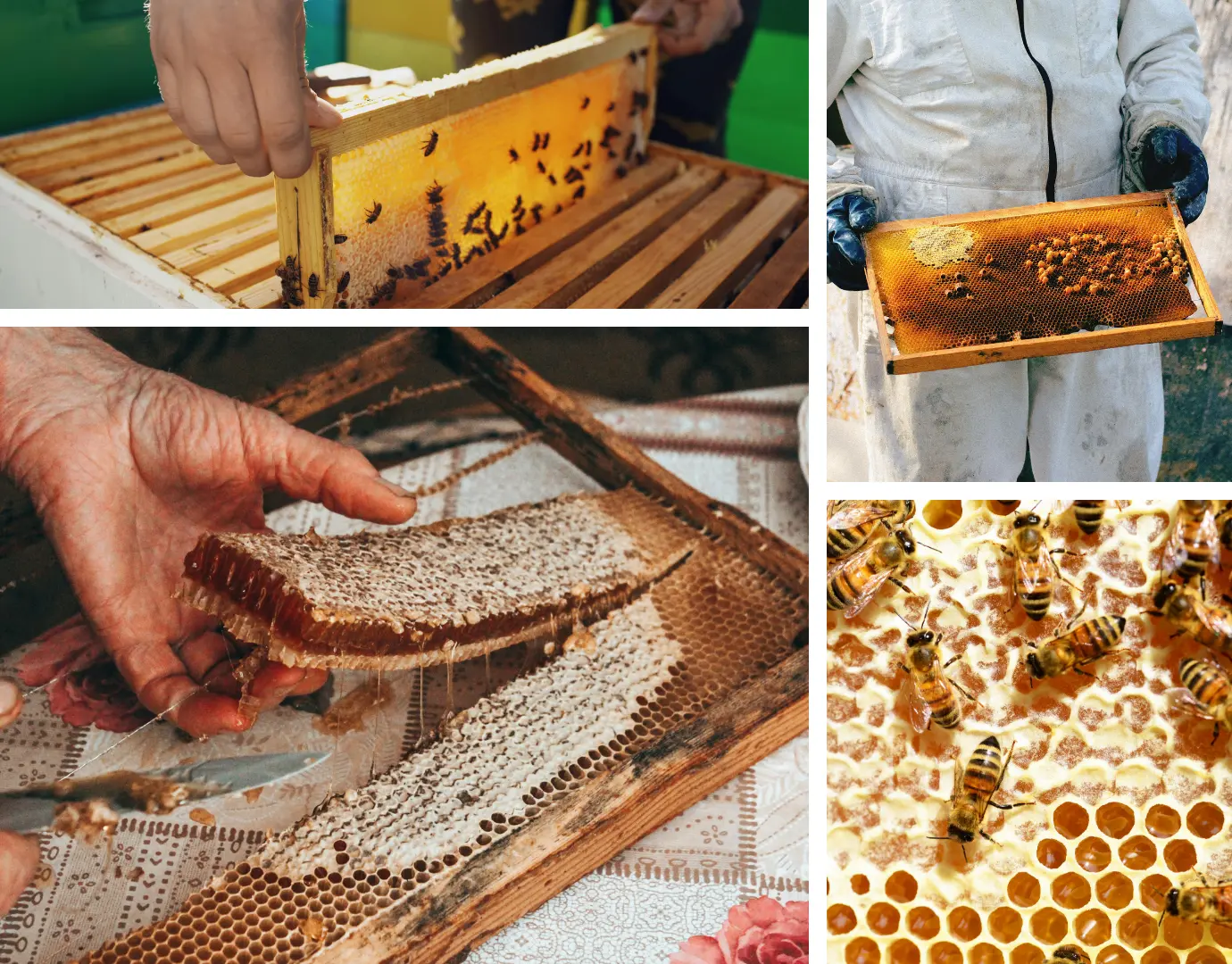
In mainstream grocery stores, you'll mostly find honeys that hav been pasteurized and finely filtered before reaching the shelf. This process makes the honey shelf-stable, visually clear, and slow to crystallize — but it also removes some of what makes raw honey distinctive: pollen, fine particles of wax and propolis, and delicate aromatic compounds that contribute to a fuller flavour.
Raw honey skips this processing. It's extracted from the comb and bottled with minimal filtering and no additional heat treatment. As a result, raw honey tends to look slightly cloudier, crystallizes more readily, and often carries a more pronounced, sometimes floral or earthy flavour compared to the neutral taste typical of heavily processed honey.
A good introduction to raw honey is Attiki Pittas Greek Liquid Honey — traditionally produced and minimally processed, yet still fully liquid. It's a natural starting point for anyone accustomed to conventional honey who wants to notice the difference raw quality makes, without moving to a thicker or less familiar format right away.
A few ways to identify raw honey when shopping:
- Look for labelling that specifically states "raw" — terms like "natural" and "pure" aren't regulated the same way and don't guarantee the same thing as "raw"
- Slight cloudiness or visible texture is a good sign, not a defect
- Raw honey often crystallizes over time in the jar; this is expected and doesn't indicate spoilage (a brief warm water bath will restore it back to its liquid form)

Liquid, Creamed, and Honeycomb: Understanding the Format
Beyond the raw-versus-regular distinction, honey also comes in a few distinct physical forms. One of the most common questions we hear is whether creamed honey is a separate product from liquid honey. It isn't — the difference lies entirely in how it's finished.
Liquid Honey
Liquid is the most familiar form: pourable, drizzle-ready, and the default most people picture.
Creamed honey
Creamed honey is the same raw honey, deliberately crystallized under controlled conditions to produce a smooth, spreadable texture — closer to soft butter than to syrup. Nothing is added or diluted; the honey is simply encouraged to crystallize evenly, rather than into the coarser crystals that form when honey crystallizes naturally on its own. Check out Heritage Bee Co. Classic Wildflower Creamed Honey which illustrates this well — Ontario honey spreads cleanly on warm toast or a biscuit without dripping and holding its shape, which is the entire purpose of creamed honey.
Honeycomb
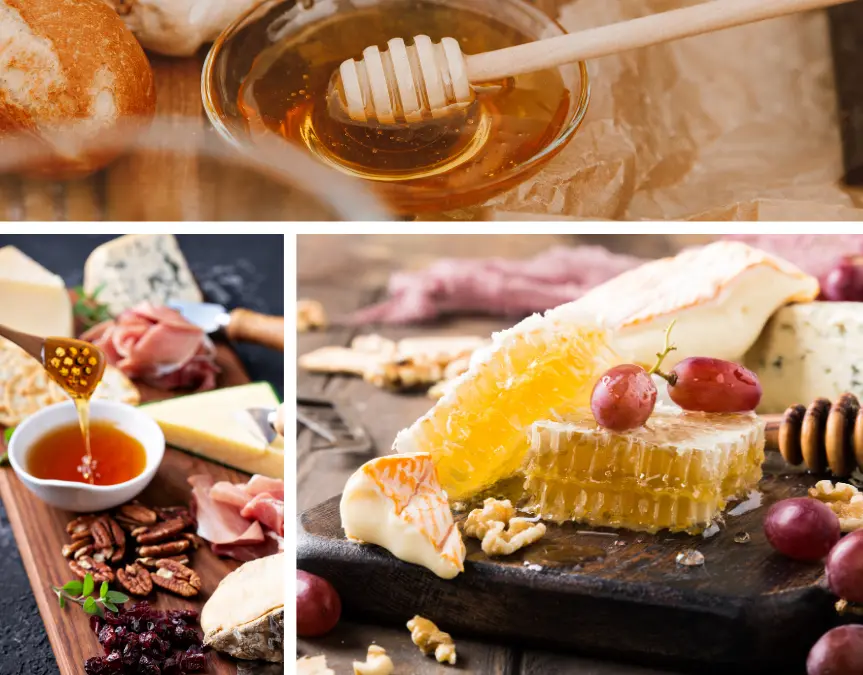
Honeycomb is the least processed form available. It's honey still sealed within its original beeswax comb, exactly as the bees produced and stored it — nothing extracted, filtered, or removed. The wax itself is edible, with a mild, slightly waxy texture, and is traditionally eaten alongside the honey, though some prefer to chew it and set the wax aside. Drizzle Honey Honeycomb offers a striking way to experience this format; sliced onto a cheese board, it tends to draw genuine curiosity from guests.
A quick reference for which format suits which use:
- Liquid — baking, tea, drizzling over yogurt or roasted vegetables
- Creamed — spreading on toast, biscuits, or scones without the mess
- Honeycomb — a striking cheese board addition, or enjoyed simply on its own
Why Floral Source Changes Everything
Bees don't produce a single uniform product. The flavour, colour, and even texture of honey depend heavily on which flowers the bees were foraging when it was made — much the same way wine varietals or single-origin coffee reflect their source, or terroir.
A useful way to experience this is by comparing Burke's Clover Honey & Buckwheat Honey side by side. Clover honey is light in colour, mild, and mellow — the honey most people picture by default, well suited to anywhere sweetness is wanted without much additional character. Buckwheat honey, by contrast, is notably dark and bold, with a rich, almost molasses-like flavour that can genuinely surprise those expecting something closer to clover. Neither is inherently better; each is simply suited to different uses, from an everyday tea sweetener (clover) to a more assertive glaze or marinade ingredient (buckwheat). There's only one way to determine what you like, taste them!
When Honey Becomes a Specialty Item
Certain honeys are valued specifically for where and how they're produced — geography, bee species, and harvesting method can elevate a jar of honey from pantry staple to specialty ingredient.
Arataki Manuka Honey UMF 15+ is a well-known example. Produced in New Zealand from bees foraging on the native Manuka bush, it's graded using systems such as UMF (Unique Manuka Factor) or MGO (methylglyoxal), which measure the concentration of specific naturally occurring compounds. In practical terms, a higher rating reflects a higher concentration of those compounds.
Methylglyoxal (MGO) measures a single, specific compound — methylglyoxal — expressed in milligrams per kilogram of honey. It's the most direct way to gauge concentration, and MGO ratings on jars typically start around 30+ and can run well past 800+ for the most potent batches.
Unique Manuka Factor (UMF) is a broader system developed and regulated in New Zealand. Rather than measuring MGO alone, it accounts for several naturally occurring markers together — including methylglyoxal, along with DHA and leptosperin, the latter of which helps confirm the honey genuinely comes from manuka nectar rather than a blend. UMF ratings are typically expressed on a scale from around UMF 5+ up to UMF 20+, with UMF 25+ or higher reserved for rare, premium batches. Because it verifies authenticity and freshness alongside potency, UMF is generally considered the more comprehensive of the two systems, though MGO remains simpler to test and easier to compare at a glance.
The two scales do roughly correspond to one another — as a general rule of thumb, UMF 10+ lines up with an MGO rating in the low 200s, UMF 15+ with an MGO rating in the low 500s, and UMF 20+ with an MGO rating in the low 800s — though exact conversions can vary. In practical terms, a higher rating on either scale reflects a higher concentration of these compounds. This grading system is a large part of why Manuka honey costs meaningfully more than a standard jar: it reflects verified, lab-tested potency rather than marketing alone. As with any honey, it's best regarded as a distinctive culinary ingredient rather than a medicinal product, but its robust flavour, rigorous grading, and reputation have earned it a place as a sought-after specialty item.
Honey as an Ingredient: Two Approaches to Infusion
Flavoured honey deserves its own explanation, since there are actually two distinct approaches to it — not just one broad category.
Ingredient-infused honey is honey steeped with real fruit, spice, or botanicals, allowing flavour to develop naturally over time. New to Pusateri's, the Heritage Bee Company line reflects this approach, with flavours including Triple Lemon, Ginger Infused, Fig & Orange, and Cinnamon — each built by infusing creamed honey with the actual ingredient rather than artificial flavouring. These work well stirred into tea, spread over toasts, as an alternative to honeycomb on a cheeseboard, incorporated into salad dressings, roasting, can be used as a filling for cake, pastries, & pies. For a closer look at this specific line, see our dedicated guide to the Heritage Bee Co. flavours and how best to use each one.
Spirit-infused honey takes a different approach entirely: honey infused with an actual spirit rather than a food ingredient. Peace River Bourbon Infused Hot Honey falls into this category and leans more toward entertaining than everyday use — a bourbon-honey glaze on grilled meat, a finishing drizzle over dessert, or an addition to a cocktail for a rounder sweetness than simple syrup provides.
The practical distinction: reach for ingredient-infused honey the way you would any flavoured pantry staple — often, and casually. Reach for spirit-infused honey the way you would a specialty cooking wine or liqueur — deliberately, for a specific dish or occasion.
A Simple Buying Guide
For a quick answer while shopping, here's the short version:
| If you want... | Reach for... |
| An everyday, all-purpose honey | Clover or a mild wildflower liquid honey |
| Something to spread, not drizzle | Heritage Bee Co. Wildflower Creamed Honey |
| A striking cheese board addition | Drizzle Honey Honeycomb |
| A bolder, more distinctive flavour | Buckwheat honey |
| A specialty gift or standout jar | Cammell's Manuka Honey |
| A flavoured honey for toast, cheeseboards, salad dressings and baking | Heritage Bee Co. infused creamed honeys |
| Something for cocktails, glazes, or dessert finishing | Peace River Bourbon Hot Honey |
Honey rewards a bit of curiosity. Once the differences between a light clover and a bold buckwheat, or between pourable liquid and true honeycomb, become apparent, honey stops being a single pantry staple and starts to feel more like its own small spice rack. Explore the full selection in store, and don't hesitate to ask our team for guidance on the right choice for what you're making.
Not All Honey Is the Same: A Guide to Raw, Creamed, Liquid, Comb, and Everything In Between